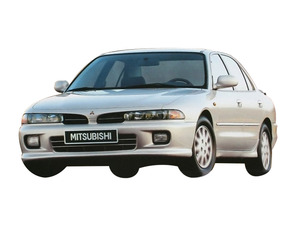
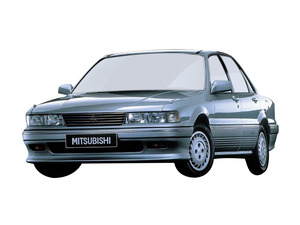
The Mitsubishi Galant is one of the longest-running nameplates in Mitsubishi’s history, introduced in 1969 as a compact sedan and later evolving into a midsize executive car.
Across nine generations, the Galant represented Mitsubishi’s balance of practicality, engineering, and refined styling.
The first generation began as a rear-wheel-drive compact in Japan, while later models transitioned into global markets, offering sedan, hardtop, coupe, and station wagon body styles.
Its first generation had become a strong competitor to the Toyota Corona, Nissan Bluebird, and Honda Accord.
Over the decades, Mitsubishi steadily advanced the Galant’s appeal with technological features such as turbocharging, all-wheel drive, and even rally-inspired performance trims like the VR-4.
By the 1990s, the Galant had evolved into a more mature midsize sedan, with its focus shifting from sporty variants to refinement and everyday usability.
After the era highlighted here, the ninth generation (2003–2012) marked the final phase of the Galant nameplate.
In Pakistan, the Galant had remained an imported executive sedan choice, particularly appealing to those who valued Japanese engineering with distinctive styling.
Latest Updates
- The seventh generation marked a breakthrough with the world’s first 4-wheel multi-link suspension in a front-wheel-drive car, along with a 1994 facelift that added new bumpers, taillights, and a revised 1.8L DOHC engine; however, the Sports liftback was dropped in 1995 due to low demand.
- It introduced GDI (Gasoline Direct Injection) engines, offering both higher power and better fuel economy compared to conventional petrol engines.
- Multiple engine choices were available, including 2.0L and 2.4L inline-four GDI units, as well as larger V6 options in select markets.
- In contrast, the ninth generation (2003–2012) moved further into the executive sedan category, offering more interior space and featuring V6-focused lineups.
Price and Variants (PKR)
In Pakistan, the Mitsubishi Galant was available as a CBU import in sedan and station wagon forms. Variants included trims with 2.0L and 2.4L GDI engines, along with options for automatic or manual transmission.
The Mitsubishi Galant price in Pakistan in 2026 varies based on import duties, condition, and trim level. However, as a discontinued import, it currently has a price range, depending on condition and year.
Pros and Cons
Pros:
- Advanced GDI engines combining power and fuel efficiency.
- Spacious cabin with comfortable seating for long drives.
- Solid build quality and durability of Japanese engineering.
- Rare and unique option in Pakistan’s used sedan market.
Cons:
- Spare parts availability may be limited compared to that of Toyota and Honda rivals.
- The Mitsubishi Galant featured basic safety features, including airbags, ABS, and reinforced body protection.
- Resale value is not as strong in Pakistan’s used car market.
Engine and Performance
- Engine choices ranged from a 2.0L inline-four GDI to a 2.4L inline-four GDI, producing up to 150 PS (147 hp).
- GDI engines featured an “Ultra Lean Combustion Mode” for enhanced efficiency during city and highway cruising, switching to a “Superior Output Mode” for acceleration and overtaking.
- Transmission options included a 5-speed manual and a 4-speed automatic.
- Acceleration (2.4L GDI): approx. 0–100 km/h in 10.8 seconds, with a top speed around 205 km/h.
Battery Range / Mileage
The Galant’s GDI technology offered diesel-like efficiency at low speeds and strong petrol-like performance at higher loads. The average fuel economy ranged between 11.5 and 12.2 km/l, depending on driving conditions, with a fuel tank capacity of 65 liters.
Features and Technology (Interior + Convenience)
- Automatic climate control with air conditioning
- Power windows and central door locking
- Multi-speaker audio system with USB and auxiliary cable option.
- Steering column adjustment for a better driving position
- Fabric upholstery with manual adjustment.
Safety
Safety was a strong focus, with the Mitsubishi Galant offering features such as dual front airbags, an anti-lock braking system (ABS), reinforced side impact beams, and crumple zones for frontal impact absorption. The sedan also included three-point seatbelts for all passengers, making it a competitive executive sedan in its class.
Exterior and Interior Styling
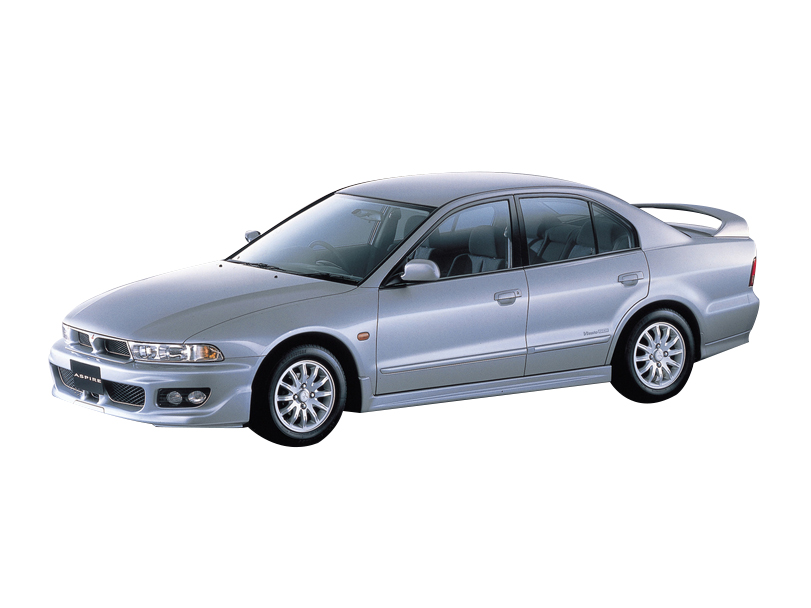
The eighth-generation Galant featured a refined exterior with smooth lines, body-colored bumpers, and an aerodynamic stance. Alloy wheels complemented its executive presence, an integrated front grille, and a vast body that emphasized stability. Inside, the Galant presented a driver-focused cockpit with a clean dashboard layout and leather upholstery. The overall styling gave it a luxurious yet understated appeal.
Colours Available
The Mitsubishi Galant was available in a wide range of colors, including Sky Blue Metallic, White, and Black.
Comparisons with Similar Cars
In contrast to the Toyota Camry (XV20, 1996–2001), the Mitsubishi Galant stood out due to its early adoption of GDI engine technology and multi-link suspension. In contrast, the Camry offered broader parts support and more substantial resale value in Pakistan.
Compared with the Honda Accord of the same period, the Galant had an advantage in fuel efficiency and lower emissions due to its modern engine options, while the Accord leaned toward larger displacement engines and benefited from a stronger service network.
In the case of the Nissan Cefiro, the Galant offered more practical engine sizes and better fuel economy, whereas the Cefiro appealed with its smoother 6-cylinder engine performance. This balance of innovation and usability makes the Mitsubishi Galant a compelling choice over competitor models for sedan enthusiasts.
Maintenance and Resale Value in Pakistan
Maintenance of the Galant in Pakistan requires specialized knowledge, especially for its GDI engines, which need cleaner fuel quality and regular servicing. Spare parts are not as common as those for Toyota or Honda, but can be sourced through specialist importers and enthusiast networks.
Resale value is moderate, as the Galant appeals to a niche buyer base rather than the general market.
Quick Specs Snapshot (Mitsubishi Galant 2.4 GDI)
|
Specification
|
Detail
|
|
Engine
|
2.4L inline-four GDI DOHC 16V
|
|
Power
|
150 hp @ 5500 rpm
|
|
Torque
|
225 Nm @ 3500 rpm
|
|
Transmission
|
5-speed manual / 4-speed auto
|
|
0–100 km/h
|
~10.8 seconds
|
|
Top Speed
|
~205 km/h
|
|
Fuel Economy
|
11.5-12.2 km/l
|
|
Tank Capacity
|
65 liters
|
|
Body Styles
|
Sedan, Station Wagon
|
Conclusion
The Mitsubishi Galant of this era represents a turning point for the brand, blending executive styling with innovative GDI engine technology. For Pakistani buyers, it offered something different from the mainstream Toyota Camry or Honda Accord, with a focus on both performance and efficiency. Today, while it may not be the easiest car to maintain, it remains attractive to enthusiasts who value exclusivity and engineering distinction.